Stabledash

Stabledash
Click to play
Click to play
Click to play

Click to play

Click to play

Click to play

Click to play

Click to play

Click to play

Click to play
Click to play

Click to play

Click to play

Click to play

Click to play

Click to play

Click to play

Click to play

Click to play

Click to play

Click to play

Click to play
Click to play

Click to play

Click to play
Click to play
Click to play

Click to play

Click to play

Click to play

Click to play

Click to play

Click to play

Click to play

Click to play

Click to play

Click to play
Click to play

Click to play

Click to play

Click to play

Click to play

Click to play

Click to play

Click to play

Click to play

Click to play

Click to play

Click to play

Click to play

Click to play

Click to play

Click to play

Click to play

Click to play

Click to play

Click to play

Click to play

Click to play

Click to play

Click to play

Click to play

Click to play
Click to play

Click to play
Season 4, Episode 4
Host:
Drew Rogers
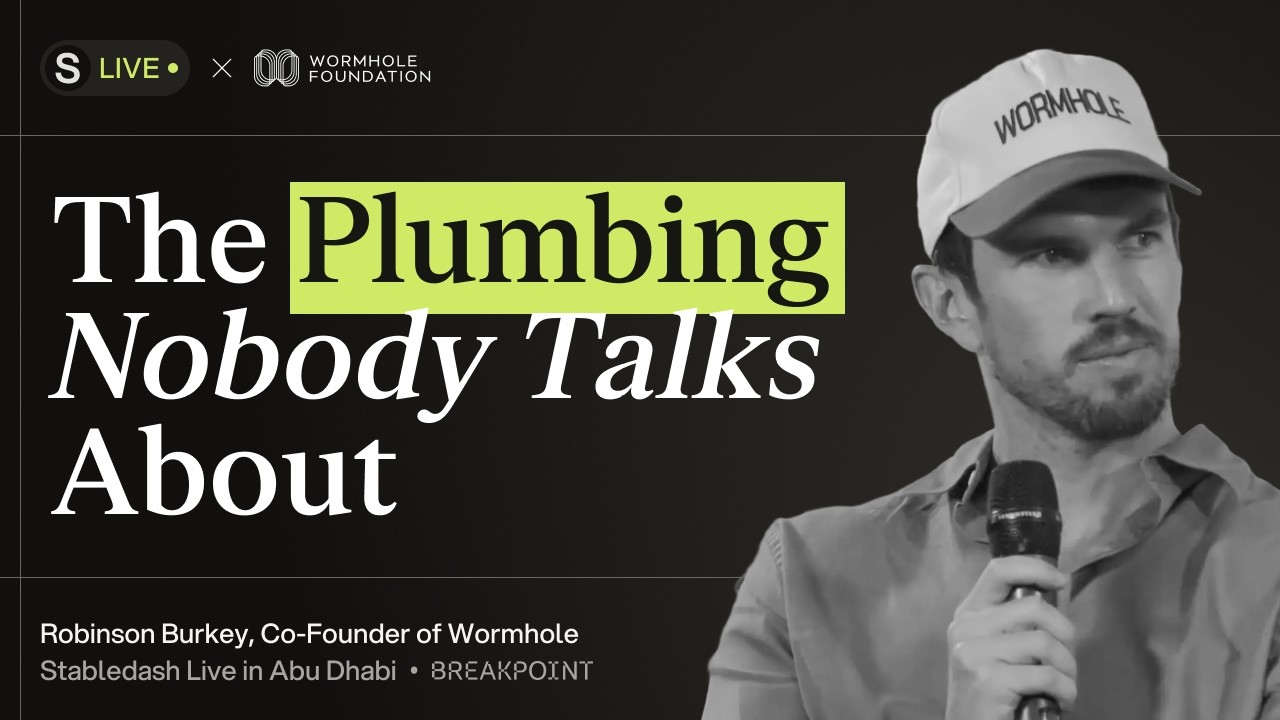
Every stablecoin lives on a different chain. USDC on Solana, USDC on Ethereum, USDT on Tron. Robinson Burkey, Co-founder and CCO of Wormhole, says this liquidity fragmentation is the single biggest infrastructure problem in crypto — and it's exactly what Wormhole was built to solve. Open your wallet and you might see four separate balances for what should be the same dollar. That's the problem Wormhole bridge infrastructure eliminates.
In this conversation recorded at Solana Breakpoint 2025, Robinson breaks down how Wormhole functions as the SWIFT for blockchains — enabling asset transfers, stablecoin bridging, and multichain routing across every major chain. With stablecoins representing roughly 50% of Wormhole's volume and the protocol facilitating 30-40% of all USDC transfers through Circle's CCTP, Wormhole sits at the center of how stablecoins actually move. Robinson explains the wallet UX nightmare that more chains and more stablecoins create, and how Wormhole abstracts all of that routing through its Native Token Transfer (NTT) standard and products like Portal so users never have to think about what chain they're on.
The conversation also covers why blockchains are getting more opinionated about stablecoins, with chains like Hyperliquid issuing their own and others reconsidering how much value USDC and USDT actually return to their ecosystems. Robinson gives a candid take on what that shift means for cross-chain interoperability infrastructure. He also walks through Wormhole's speed evolution, from 15-minute cross-chain transfers two years ago to 12 seconds today, with a target of 1-second settlement for tap-to-pay stablecoin transactions.
Key Timestamps:
00:00 - Cold open: "Can you imagine waiting 15 minutes for a tap to pay?"
02:54 - Asset transfer is 90% of Wormhole's product-market fit
04:33 - Wormhole facilitates 30-40% of USDC volume via CCTP
06:18 - Hyperliquid issuing its own stablecoin, the opinionated chain thesis
07:23 - The wallet UX nightmare: each stablecoin separated by chain
08:15 - Moto's stablecoin card and how Wormhole powers cross-chain deposits
11:59 - Portal and Mayan: the most used bridging sites in crypto
13:15 - Speed evolution: 15 minutes → 12 seconds → targeting 1 second
Guest: Robinson Burkey, Co-founder & CCO at Wormhole Foundation
Host: Drew Rogers
Follow Stabledash on X: @stabledash
Follow Wormhole on X: @wormholecrypto
Follow Robinson on X: @robinsonburkey
#Stablecoins #Wormhole #CrossChain #Interoperability #Solana #Breakpoint2025 #StablecoinInfrastructure #CryptoPayments
The content of this video is for informational purposes only and does not constitute financial, investment, or legal advice.